Mastra Factory is a free, open-source tool that lets AI agents pick up bug reports and feature requests, plan a fix, write the code and hand it back for a person to check. It is for small software teams, not businesses without a developer. You can run it yourself or on Mastra's platform from $0 a month. It was #1 Product of the Day and #1 Product of the Week on Product Hunt in September 2026. My verdict: impressive for developers, out of reach for everyone else. ★★★☆☆ 3/5.
Key facts
- What it does: Takes bug reports and requests from tools like GitHub, Jira, Linear and Slack, has AI agents plan, code and test a fix, then opens a pull request for a person to review
- Made by: Mastra (Kepler Software Inc.), San Francisco, US; backed by Y Combinator
- Launched on Product Hunt: 9 September 2026, #1 Product of the Day and #1 Product of the Week
- Price: Factory itself is free and open source. On the Mastra platform, Starter is $0 a month and Teams is $250 a month (about £188), plus usage and AI model costs
- Free plan or trial: Yes. Self-hosting is free and the Starter plan costs $0 a month
- Works with: GitHub, GitLab, Linear, Jira, Slack and incident.io, with the AI model provider of your choice
- Best for: Small software teams with a backlog of issues and a developer to set it up
- Our rating: ★★★☆☆ 3/5
On this page
- What is Mastra Factory?
- Watch the demo
- How it did on Product Hunt
- What Product Hunt users said
- How much does Mastra Factory cost?
- What I like
- What I'd want fixed
- Who should use it?
- Is it safe to use? Privacy and permissions
- Using it in the UK
- Other launches from the same team
- Alternatives to Mastra Factory
- My verdict
- Frequently asked questions
What is Mastra Factory?
If you do not write software, here is the plain version. Software teams keep a list of jobs called issues, such as "the contact form is broken" or "add a dark mode". Someone has to read each one, work out a fix, write the code and ask a colleague to check it before it goes live. That proposed change is called a pull request. Mastra Factory hands most of that routine to AI agents.
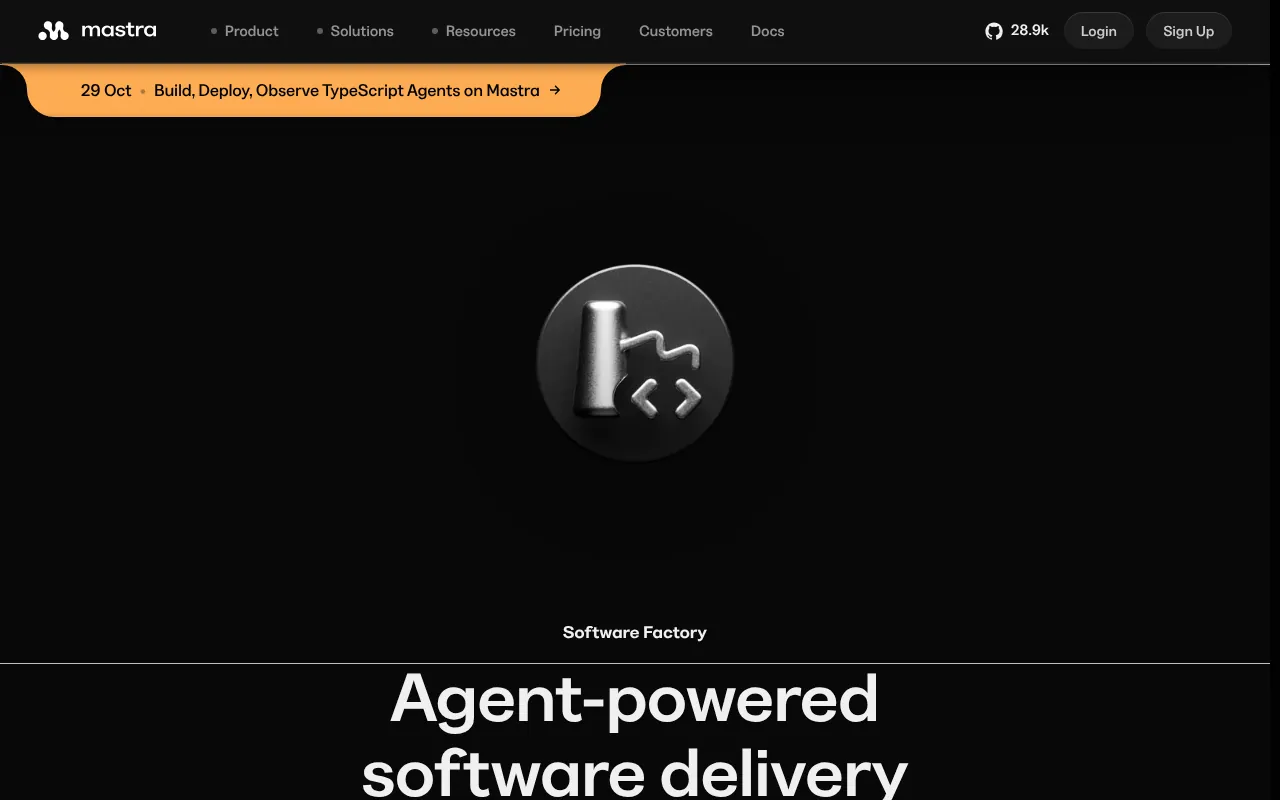
Each job becomes a card on a board with six stages: intake, triage, planning, build, review and done. An agent investigates the issue and asks your team questions. It writes a plan for a person to approve. Then it writes the code inside a sandbox - a sealed-off temporary computer - runs the checks and opens a pull request. A person reviews it and decides whether to merge it. Each stage can be set to manual or automatic.
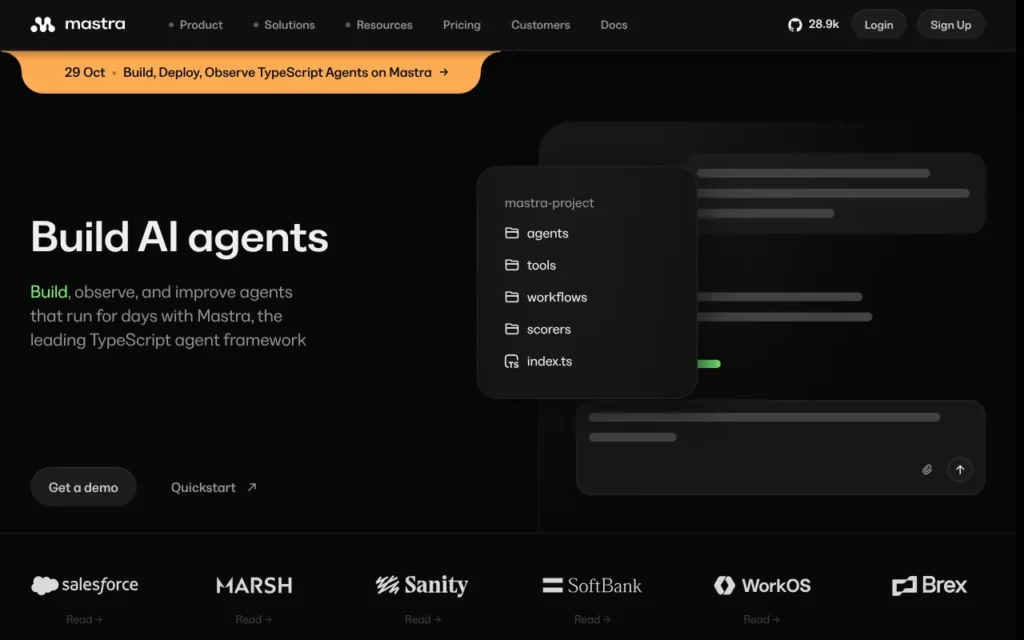
That is what makes it an agent rather than a chatbot. You do not chat with it. It picks up work and carries it through several steps, and your team steps in at set points. Mastra says Factory now writes 25-35% of its own pull requests and closes 50-60% of its issues. Mastra itself is a toolkit for building agents in TypeScript, a programming language, and Factory is built on it. My guide on how to build an AI agent explains where tools like this fit.
Watch the demo
In under two minutes, Mastra shows the Factory board with issues moving from intake to done, then opens a work item to show the agent's chat, tool activity and files.
Video: Mastra on YouTube.
How it did on Product Hunt
Mastra Factory was #1 Product of the Day on 9 September 2026, then #1 Product of the Week and #5 Product of the Month.
| Launch | Date | Daily rank | Other awards | Upvotes |
|---|---|---|---|---|
| Mastra Factory | 9 September 2026 | #1 Product of the Day | #1 Product of the Week (7-13 September 2026); #5 Product of the Month (September 2026); no Golden Kitty | 553 |
Upvotes as shown on Product Hunt's product page on 17 October 2026.
A first place for the day and the week is about as good as Product Hunt gets outside the Golden Kitty awards. It beat Harden, a security layer for AI coding agents, on the day. Mastra already had a large developer following, with about 27.1k stars on GitHub, which probably helped. Product Hunt voters are mostly tech people, so this tells you developers liked it, not that it suits a non-technical business. The product page shows 553 upvotes; the launch page shows 574.
What Product Hunt users said
- Reviews cover the whole Mastra product rather than Factory alone. The score is 4.9 out of 5 from 10 reviews.
- Builders praised the TypeScript-first design and the fact that it is self-hostable, with agents living in the same code as the app they serve. One said it needed less glue code than LangChain or crewAI.
- One reviewer described it as a full open-source software delivery workflow and liked not being locked into a closed platform.
- The main complaint is the learning curve. One reviewer asked for simpler setup and more practical examples for beginners.
- A self-hosting reviewer said the pricing jumps from free to $250 with nothing in between, and that the $100 always-on option is hidden as an add-on.
How much does Mastra Factory cost?
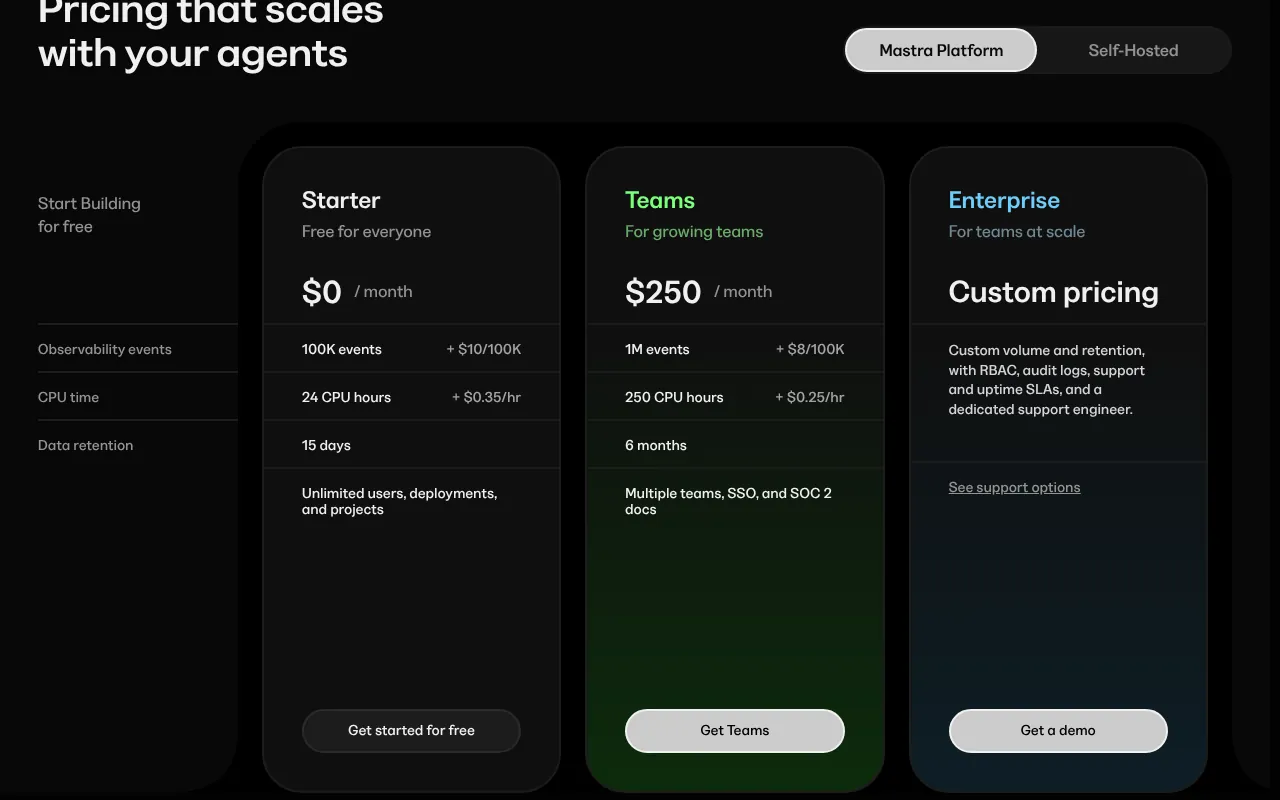
The Factory software is free and open source, and Mastra's platform has a $0 Starter plan, but real costs depend on usage and AI models.
| Plan | Price | What you get |
|---|---|---|
| Self-hosted | Free | Run Factory on your own servers. You pay your own hosting and AI model bills. |
| Starter (Mastra platform) | $0 a month | 24 CPU hours, then $0.35 an hour (about 26p); 100K observability events, then $10 per 100K (about £7.50); 15 days of data retention; unlimited users, projects and deployments |
| Teams (Mastra platform) | $250 a month (about £188) | 250 CPU hours, then $0.25 an hour (about 19p); 1M observability events; 6 months of retention; multiple teams, SSO and SOC 2 documents |
| Persistent Server add-on | $100 a project (about £75) | Keeps a server running around the clock |
| Enterprise | Custom | RBAC, audit logs, uptime SLAs and a dedicated support engineer, or a flat annual fee for self-hosting |
Prices are in dollars and exclude VAT, which Mastra's terms say it adds where legally required. No annual discount is listed. On top of this you pay for AI models, either with your own key or through Mastra's gateway at market rate plus 5.5%. My guide to what AI agents cost in the UK puts these numbers in context.
What I like
- People stay in charge at set points. Your team answers the agent's questions, approves the plan and reviews the pull request before anything is merged.
- Mastra runs its own company on it. Its claim that Factory writes 25-35% of its pull requests is a stronger signal than any launch-day demo.
- It is open source and you can host it yourself, with your own choice of AI model and your own key.
- The Starter plan has no per-seat charge and allows unlimited users, which is kind to small teams.
- The GitHub permissions are narrow. It needs write access to code, issues and pull requests in the repositories you choose, and no organisation-wide permissions.
- It meets work where it already arrives: GitHub, GitLab, Linear, Jira, Slack and incident.io.
What I'd want fixed
- It is not for non-developers. Setup runs from the command line and involves an encryption key, a GitHub App and AI model credentials.
- The privacy policy is dated April 2025 and still contains template leftovers, including a reference to "the modal.com website". It does not mention GDPR. The data processing agreement is far better, but the policy should match it.
- The docs call Factory open source, but the licence page does not say which licence covers Factory itself.
- Costs are hard to predict. CPU hours, observability events, data egress and model tokens are all metered, and the next plan up is $250 a month.
- Data is handled from the US, and data residency is only listed as an Enterprise feature.
Who should use it?
Mastra Factory suits a small software company or agency with at least one developer, a steady backlog of bug reports and the patience to set it up. If you run a shop, a salon or a consultancy without in-house code, skip it, because there is nothing here for you to use. Developers who want an AI coding agent inside their editor rather than a whole delivery line should try Cursor first.
Is it safe to use? Privacy and permissions
- Access: A GitHub App with write access to code, issues and pull requests in the repositories you pick, and no organisation permissions. The docs do not describe it merging code. It also connects to Linear, Jira or Slack if you allow it.
- Where code runs: Inside a sandbox, either Mastra's cloud machines, E2B, or locally on your own server. The docs warn that local mode has no virtual machine isolation. Mastra's terms say the service is controlled from US facilities, and its subprocessors are mostly US-based, with incident.io in the UK.
- Training: The terms say Mastra does not train models on your inputs or outputs unless you opt in, apart from aggregated, de-identified usage data. The data processing agreement says the model gateway's providers are barred from training on your data.
- UK GDPR: The data processing agreement covers UK GDPR, includes the ICO's international data transfer addendum and promises breach notice within 72 hours. SOC 2 documents come with the Teams plan. My guide to AI agents and UK GDPR explains why that agreement matters.
Using it in the UK
- Availability: The software installs anywhere and I found no country restrictions on the Mastra platform.
- Currency and VAT: Priced in US dollars. Fees exclude VAT, which Mastra adds where legally required, and UK consumers get a 14-day withdrawal right under its terms.
- Data location: The US by default. If you need code to stay on UK servers, self-hosting is the realistic route.
Other launches from the same team
- Mastra 1.0, the TypeScript agent framework: 21 January 2026, #3 Product of the Day, #4 Product of the Week, 451 upvotes.
- Observational Memory by Mastra, long-term memory for agents: 11 February 2026, #12 on the daily leaderboard, 119 upvotes.
- Mastra Code, a coding agent: 27 February 2026, #5 Product of the Day, 201 upvotes.
Alternatives to Mastra Factory
- Cursor - pick it if you want an AI coding agent inside your code editor rather than a whole issue-to-release pipeline.
- Kilo Code - pick it if you want an open-source coding agent in VS Code, JetBrains or the command line, with no markup on AI model costs.
- Devin - pick it if you want a hosted coding agent that plugs into Slack, Linear and Jira without running anything yourself. It has a free plan and Pro costs $20 a month (about £15).
My verdict
| Area | Score |
|---|---|
| Usefulness | 3/5 |
| Getting started | 2/5 |
| Value for money | 4/5 |
| Trust and privacy | 4/5 |
| UK fit | 3/5 |
| Overall | ★★★☆☆ 3/5 |
If I ran a small software team, I would try Mastra Factory on the free Starter plan with one repository and plan approval switched on. For a business without a developer, it is the wrong tool, and a hosted agent or an agency is the better bet.
Frequently asked questions
Is Mastra Factory free?
The software is free and open source, and you can host it yourself. Mastra's platform also has a $0 Starter plan with 24 CPU hours a month. You still pay for the AI models the agents use, and the paid Teams plan costs $250 a month (about £188).
What does Mastra Factory do, in plain English?
It works like a production line for software fixes. A bug report arrives, an AI agent investigates it, writes a plan for a person to approve, writes and tests the code in a sealed-off computer, and sends the change back for a person to check before it goes live.
Mastra Factory vs Devin
Devin is a hosted coding agent with monthly plans, so there is nothing to install. Mastra Factory is open source, so you can run it on your own servers and shape every stage of the process. Mastra says it used Devin for quick fixes before building Factory. Pick Devin for convenience and Factory for control.
Read next
Sources
- Mastra on Product Hunt - checked 17 October 2026
- Mastra launches on Product Hunt - checked 17 October 2026
- Mastra Factory launch on Product Hunt - checked 17 October 2026
- Mastra reviews on Product Hunt - checked 17 October 2026
- Product Hunt daily leaderboard, 9 September 2026 - checked 17 October 2026
- Product Hunt weekly leaderboard, week of 7 September 2026 - checked 17 October 2026
- Product Hunt monthly leaderboard, September 2026 - checked 17 October 2026
- Product Hunt daily leaderboard, 21 January 2026 - checked 17 October 2026
- Product Hunt weekly leaderboard, week of 19 January 2026 - checked 17 October 2026
- Product Hunt daily leaderboard, 11 February 2026 - checked 17 October 2026
- Product Hunt daily leaderboard, 27 February 2026 - checked 17 October 2026
- Mastra homepage - checked 17 October 2026
- Mastra Factory - checked 17 October 2026
- Mastra pricing - checked 17 October 2026
- How Mastra platform pricing works - checked 17 October 2026
- Announcing Mastra Factory - checked 17 October 2026
- Announcing Mastra Factory Beta - checked 17 October 2026
- Mastra Factory docs: get started - checked 17 October 2026
- Mastra Factory docs: intake - checked 17 October 2026
- Mastra Factory docs: sandboxes - checked 17 October 2026
- Mastra Factory docs: GitHub - checked 17 October 2026
- Mastra Factory docs: models - checked 17 October 2026
- Mastra licence - checked 17 October 2026
- About Mastra - checked 17 October 2026
- Mastra on GitHub - checked 17 October 2026
- Mastra privacy policy - checked 17 October 2026
- Mastra terms of service - checked 17 October 2026
- Mastra data processing agreement - checked 17 October 2026
- Building Your Own Software Factory Is Easy, Actually (Mastra on YouTube) - checked 17 October 2026
- We Used to Use Devin. Now We Built Our Own. (Mastra on YouTube) - checked 17 October 2026
- Kilo Code - checked 17 October 2026
- Devin pricing - checked 17 October 2026