Independent: no vendor pays for coverage · Built from ICO, NCSC and UK GDPR sources · Free to download and reuse · AI-assisted research, human-checked · How we test · Edited by Annie Vane
Before you let an AI agent near customer or staff data, ask the supplier ten questions in writing. If they score under 10 out of 20, or fail on training, the DPA or the off switch, walk away or keep personal data out of it. The questions cover where your data is stored, whether it trains their models, who else processes it, how you switch the agent off, what it costs when usage spikes, and how you get your data back. They turn UK GDPR, ICO and NCSC expectations into plain English, with what a good and a bad answer looks like.
Last checked: 1 November 2026 · Written by Annie Vane, editor · Evidence: Worked example (fictional supplier) + Documentation review
Prepared with AI assistance for research and drafting; every source was checked by me before publishing. How we test
Download: Word (.docx) · PDF (free, no sign-up)
When you need this checklist
Use it whenever an AI tool will read, store or act on personal data (customer emails, CVs, invoices, patient or client records), or will act in your systems, such as sending emails, changing records or making payments. Under UK GDPR, if the supplier processes personal data for you, it's your processor and you must use only processors that give "sufficient guarantees" (Article 28). These questions are how you check.
You don't need it for a personal tool you use with no client data. A sensible setting change is enough there.
The ten questions
Data and privacy
1. Where is our data stored, and where is it processed?
- Good: names regions ("stored in UK South; model inference in the EU; web search in the US") and puts it in the contract.
- Bad: "Our cloud is secure", or "Europe" with no detail.
- Why: transfers outside the UK need cover under UK GDPR. See the UK data residency tracker.
2. Do you train or improve models on our data?
- Good: "No, not by default, and it's in the data processing agreement."
- Bad: "Only anonymised data", with no definition, or an opt-out buried in settings.
3. Who else processes our data?
- Good: a published sub-processor list, including any model provider (OpenAI, Anthropic, Google and so on), with notice of changes.
- Bad: no list, or "we use leading AI partners".
4. Will you sign a data processing agreement that covers UK GDPR?
- Good: a DPA naming them as processor, with the UK Addendum or IDTA for transfers.
- Bad: "Our terms of service cover it."
Security and control
5. What can the agent access, and can we limit it?
- Good: per-tool permissions, read-only options, approval before anything irreversible (sending, paying, deleting).
- Bad: one "connect everything" button.
- Why: NCSC and DSIT guidance both stress least privilege. Our AI agent security notes explain prompt injection.
6. Is there a log of everything the agent did?
- Good: an exportable action log with timestamps and the data touched.
- Bad: chat history only.
7. How do we switch it off, fast?
- Good: a kill switch or admin revoke that stops all actions at once, plus a named incident contact and breach notice time in the contract.
- Bad: "Raise a support ticket."
Contract, cost and exit
8. What does it cost when usage spikes?
- Good: a price in pounds (or the dollar price with VAT treatment stated), clear usage limits, and a hard spending cap.
- Bad: "credits" with no cap, or overage billed after the fact. Compare against the UK AI price tracker.
9. How do we get our data back and deleted if we leave?
- Good: export in a standard format, deletion within a stated number of days, and written confirmation.
- Bad: no exit clause.
10. What happens to us if you change model, owner or terms?
- Good: notice period for material changes and a right to leave without penalty.
- Bad: "We may update these terms at any time."
How to score the answers
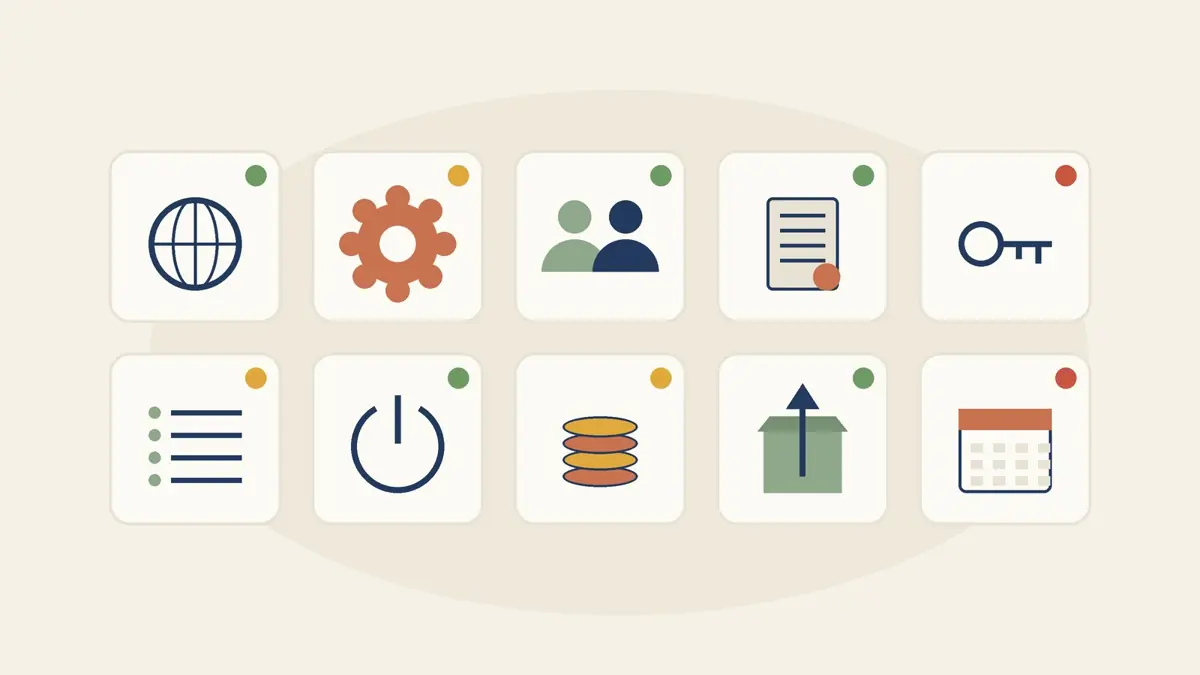
Score each answer 2 (clear, in writing, in the contract), 1 (clear but only on a web page or in an email) or 0 (missing, vague or bad).
| Total out of 20 | What it means |
|---|---|
| 16-20 | Reasonable to proceed with personal data, subject to your DPIA |
| 10-15 | Pilot with test or low-risk data only; chase the gaps |
| Under 10, or a 0 on question 2, 4 or 7 | Walk away, or use it with no personal data at all |
Keep the completed sheet with your DPIA. The ICO's draft guidance says you'll usually need one for automated decision-making. Our free DPIA template has a section for it.
Worked example: "Supplier A" (fictional)
This is an illustration of the method. Supplier A is invented; the answers are written to show typical patterns, not taken from any real company.
A 12-person Leeds accountancy practice wants an AI agent that reads client emails, drafts replies and files attachments. Supplier A's sales team answered by email.
| # | Answer received (summarised) | Score |
|---|---|---|
| 1 | "Data stored in the EU (Dublin); model calls go to a US provider." | 1 |
| 2 | "We do not train on customer data." In the DPA. | 2 |
| 3 | Sub-processor list published, includes the US model provider | 2 |
| 4 | DPA available, includes the UK Addendum | 2 |
| 5 | Can limit to one shared inbox; sending needs approval | 2 |
| 6 | Chat history only, no action log | 0 |
| 7 | Admin can revoke access; breach notice "without undue delay" | 1 |
| 8 | $40 a user a month, credits, no hard cap | 0 |
| 9 | Export on request; deletion in 30 days | 1 |
| 10 | 30 days' notice of changes | 1 |
| Total | 12 / 20 |
Verdict: pilot only. Before client data goes in, the practice asks for an action log and a spending cap in writing, and adds the US transfer to its DPIA and privacy notice.
Red flags that end the conversation
- They can't say which model provider they use.
- Training on your data is on by default, with no business plan that turns it off.
- No DPA, or a DPA that only mentions EU GDPR and not UK GDPR.
- The agent can send, pay or delete without any approval step.
- Pricing only in "credits", with no cap and no pound figure.
Frequently asked questions
Do I legally have to do due diligence on an AI supplier?
If it processes personal data for you, yes in effect: UK GDPR Article 28 says you may only use processors that give sufficient guarantees, and you must be able to show how you checked.
Is a big-name AI company automatically safe?
No. The same company can be suitable on a business plan and unsuitable on a personal one, because training defaults and DPAs differ by plan.
What if the supplier won't answer in writing?
Score the question 0. A supplier that won't commit in writing is telling you something.
Sources
- UK GDPR Article 28 (processors), legislation.gov.uk
- ICO, guidance on AI and data protection and draft guidance on automated decision-making (31 March 2026), via our ICO AI guidance tracker
- NCSC, Guidelines for secure AI system development (ncsc.gov.uk)
- DSIT, AI Cyber Security Code of Practice (gov.uk)
This page explains UK law and regulator guidance in plain English, checked against legislation.gov.uk, gov.uk and ico.org.uk on 1 November 2026. It is general information, not legal advice. For a contract that matters, ask a data protection professional or solicitor to review it. Spotted something out of date? Tell me.